

« We ran a seminar last year. Six months on, no one remembers it. » « The CFO will ask me what the return is. What do I say? » « If I suggest a team building, half the team will roll their eyes. »
If you’ve ever thought one of these, this article is for you.
In summary
Every year, the same question comes up in the leadership team and in HR: seminar, team building, both? What budget? And how can you be sure it will pay off?
The key window: the corporate Indian Summer, 6 to 8 weeks across September-October. Based on our field observations across several hundred Tero events, this is the period when the same budget delivers the most impact on engagement and alignment — far more than in January or June.
Two formats dominate — the seminar (strategy) and the team building (connection) — as a day or residential format. They don’t serve the same KPIs; the best organisations often use both.
This article tackles head-on what no one dares ask in meetings: justifying the budget to the CFO (Gallup, McKinsey, SHRM benchmarks), avoiding the flop, measuring ROI, and why what matters most happens after the event, not during.
Why the Indian Summer is the best window of the year
The corporate Indian Summer refers to the 6 to 8 weeks across September-October when three factors align:
- Teams mentally available after the holidays.
- Event budgets still intact.
- Weather that lets you mix indoor and outdoor — a decisive asset for sports team building.
For CEOs, that’s 3 months of visibility before the Q4 close. For HR directors, the window when an investment in engagement delivers the greatest impact on the year.
At Tero Hospitality, every year we support hundreds of companies during this key period, through our network of 17 venues in Belgium and Luxembourg. We offer flexible and integrated packages: day venues, lodges for residential seminars, team building and catering service, all brought together under one brand.
The 6 questions HR and management really ask themselves
1. How do I justify this budget to the CFO?
A well-designed corporate event is not a mere comfort expense. It’s an HR and business investment, directly linked to talent retention, employee engagement, productivity and the quality of decisions.
Four figures help put the budget into perspective:
- Turnover is expensive
An employee leaving represents a significant cost for the company: recruitment, onboarding, lost productivity, extra strain on teams and loss of internal knowledge. According to estimates, this cost can amount to several months’ salary, or even a significant share of the annual salary depending on the seniority of the role. So reducing turnover by a few points in a company of 150 people can mean several hundred thousand euros saved over a year. - Misalignment slows down decisions
A team that lacks clarity, cohesion or strategic alignment takes longer to decide. According to McKinsey, executives spend a significant share of their time on decisions, yet a majority feel that this time is not used effectively. A corporate seminar makes it possible to step out of the daily routine, clarify priorities, smooth out exchanges and create an environment conducive to useful decisions. - Engagement has a measurable impact on performance
Gallup studies show that the most engaged teams achieve better results in terms of profitability, productivity, absenteeism and turnover. Investing in team cohesion, a sense of belonging and employee motivation is therefore not a “nice-to-have”: it’s a concrete driver of performance. - In Belgium, absenteeism remains a major challenge
In 2024, more than one Belgian worker in two reported being absent at least once, according to Securex. The frequency of absences is also higher than in the pre-Covid period. In this context, strengthening engagement, the bond between colleagues and the quality of management becomes a direct driver of retention, presence and wellbeing at work. - So the return on investment isn’t limited to the seminar day.
It’s measured over the year: better cohesion, faster decisions, more engaged teams, a potential drop in turnover, lower absenteeism and improved collective efficiency.
Depending on the company’s context, the size of the teams and the HR challenges identified, the potential return can far exceed the initial investment, especially when a seminar helps reduce turnover, absenteeism or internal friction.
At Tero Hospitality, we help companies create these high-impact moments through an integrated offer: seminar venues, residential lodges, team building and catering service, brought together under one brand, across 17 venues in Belgium and Luxembourg.
2. And what if half the team rolls their eyes?
A successful corporate team building shouldn’t be imposed, but designed as an accessible and useful experience. The outdoor Indian Summer activities are suited to all fitness levels, with free informal moments and a professional thread that gives the day meaning. Everyone can take part at their own pace and find their place.
3. Why not organise this in-house?
Organising a seminar or team building in-house may seem cheaper, but it’s often a false economy. You have to factor in coordination time, logistics, suppliers, unforeseen events and the energy mobilised internally.
Getting out of the office also creates a real shift in mindset: conversations are more open, teams make themselves available in a different way, and the quality of the venue turns a simple event into a memorable experience.
4. How do you know if this is the right year to invest?
A change in strategy, a busy Q4, declining eNPS, the arrival of many new employees, a lack of cohesion or no unifying moment for several months.
If you tick two boxes or more, the topic deserves to be taken seriously. Beyond four, not organising an event can come at a real cost: misalignment, declining engagement, turnover or loss of collective efficiency.
5. And what if the team would rather work from home that day?
The key is to anticipate and give meaning. Communicate the date several months in advance and present the event as a perk: a beautiful venue, a quality experience, a carefully prepared meal and a real team moment.
Being there in person can be non-negotiable when the goal is clear: rebuilding connection, strengthening team cohesion and bringing the collective to life in a way that goes beyond a screen.
6. How do you measure ROI afterwards?
The ROI of a corporate event is measured over time. A survey at day 7 lets you assess satisfaction, a second at day 30 measures engagement and strategic clarity, and a final one at day 90 analyses the lasting effect on collaboration.
These results can then be cross-referenced with your HR and business KPIs: turnover, absenteeism, eNPS, employee engagement, sales performance or the efficiency of cross-functional projects. It’s this cross-referencing that produces the ROI narrative to present to the committee.
Key takeaway
If you can answer these 6 questions, you’re ahead of 80% of HR directors on the market.
A corporate seminar or an outdoor team building isn’t just about “treating” your teams. Well-designed, it becomes a concrete driver of engagement, cohesion, retention and collective performance.
At Tero, we help companies create high-impact moments through an integrated offer: seminar and reception venues, residential lodges, outdoor or indoor team buildings, and catering service in Belgium and Luxembourg.
The back-to-work seminar: purpose and ROI
The seminar is built around content: plenary sessions, workshops, presentations and time for exchange. Its purpose is clear: to clarify strategy, align teams and structure priorities.
The most common formats include the strategic seminar, the sales kick-off, the company convention and the residential seminar in a lodge, usually organised over 1.5 to 2 days.
On the employer side, the benefits are measured through several indicators: strategic alignment, improved sales conversion after a kick-off, or a rise in engagement at day 30.
On the employee side, the seminar strengthens the sense of meaning, belonging and recognition, while also encouraging skills development.
Want to see what it looks like in real life? → Discover Tero’s exceptional venues in Belgium and Luxembourg.
The back-to-work team building: purpose and ROI
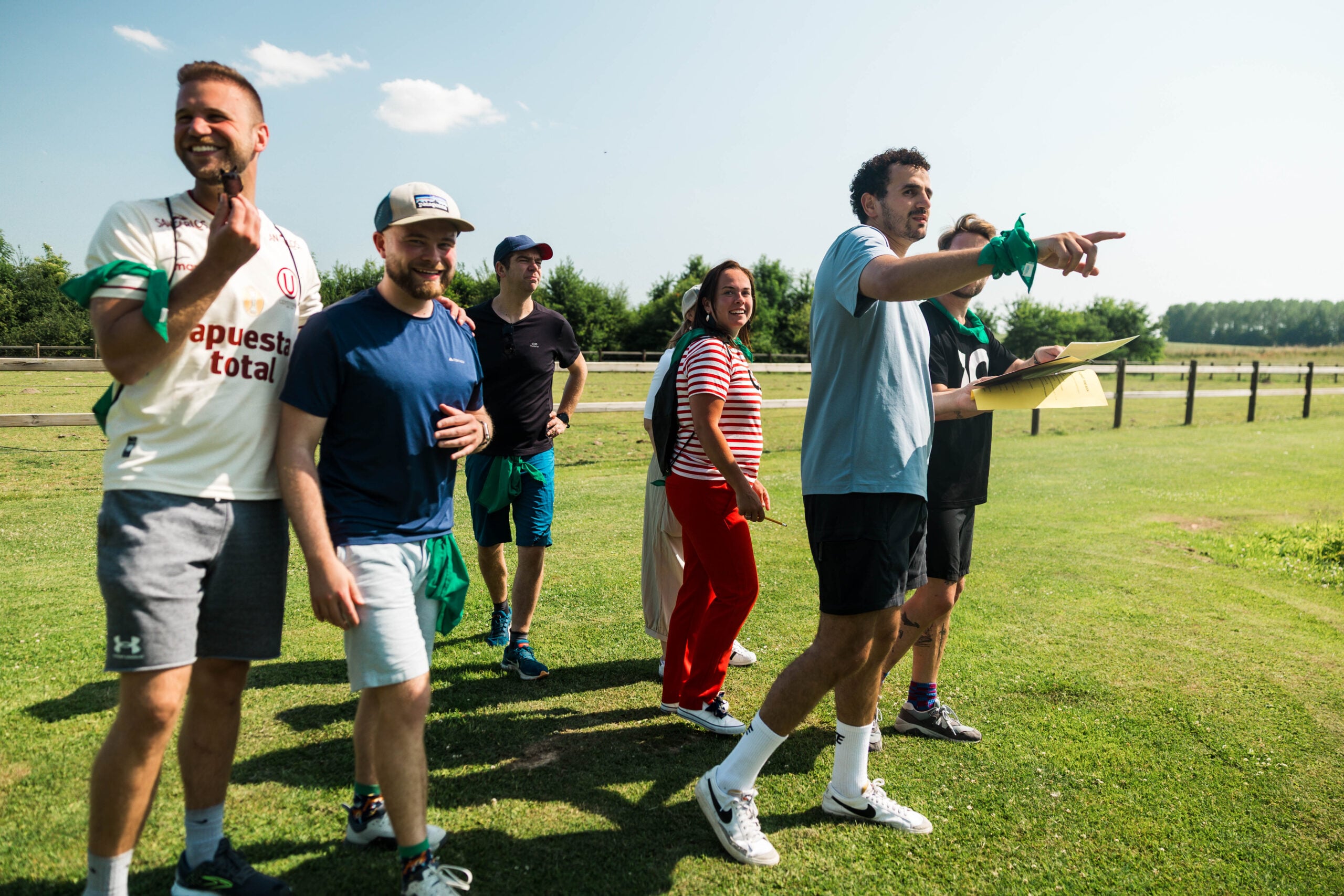
The team building is built around a shared experience: no slides, but a collective activity that creates connection, energy and cohesion. Its purpose is clear: to bring teams closer together, re-energise them and smooth out collaboration.
In Indian Summer, outdoor formats are particularly well suited: olympics, discovery rallies, accessible sports challenges, orienteering, padel or collective challenges. The goal isn’t performance but participation, mutual support and the collective experience.
On the employer side, the benefits are measured through several indicators: team cohesion, cross-functional collaboration, faster onboarding of new employees, visual content for employer branding and potential impact on retention.
On the employee side, team building encourages decompression, connection beyond hierarchy, a sense of belonging and collective pride.
Want to see what it looks like in real life? → Discover our catalogue of 56 team building activities in Belgium and Luxembourg.
The back-to-work team building: purpose and ROI
The team building is built around a shared experience: no slides, but a collective activity that creates connection, energy and cohesion. Its purpose is clear: to bring teams closer together, re-energise them and smooth out collaboration.
In Indian Summer, outdoor formats are particularly well suited: olympics, discovery rallies, accessible sports challenges, orienteering, padel or collective challenges. The goal isn’t performance but participation, mutual support and the collective experience.
On the employer side, the benefits are measured through several indicators: team cohesion, cross-functional collaboration, faster onboarding of new employees, visual content for employer branding and potential impact on retention.
On the employee side, team building encourages decompression, connection beyond hierarchy, a sense of belonging and collective pride.
Want to see what it looks like in real life? → Discover our catalogue of 56 team building activities in Belgium and Luxembourg.
When to choose one, the other, or both
Choose the seminar if strategy is evolving, if your sales teams need to align on a new pitch before Q4, if leadership has a structuring message to deliver, or if your teams are close-knit but lack clarity.
Illustrative case: a 120-person SaaS company has just revised its product roadmap, but the sales, marketing and customer success teams aren’t yet telling customers the same story. A seminar day brings everyone together around a clear plenary session, then works by BU on the key messages, the Q4 priorities and field objections. Afterwards, each team leaves with the same direction, the same pitch and a better understanding of its role in the strategy.
Choose team building if your teams are scattered, if you’ve welcomed many new employees, or if the main challenge is cohesion rather than strategy.
Illustrative case: an 80-person tech scale-up works from home three days a week and has integrated 15 new employees over the year. Some only know each other through Teams, and exchanges remain very project-focused. Inter-team olympics in September create unexpected pairings, informal conversations and shared memories. After the event, the newcomers get a better sense of who does what, more readily reach out to the right colleagues and feel more part of the collective.
Combine the two when your challenges blend strategy and cohesion. Two formats work particularly well: a single day with a seminar in the morning, outdoor team building in the afternoon and a dinner; or a 1.5 to 2-day residential stay in a lodge, for a more lasting cohesion effect.
The 5 mistakes that sink your ROI
5 mistakes to avoid for a successful corporate seminar or team building
1. Trying to do everything in one day
Vision, review, launch, HR workshop, team building: by trying to fit everything in, no message really sticks.
The right approach: define one dominant intention and two secondary objectives at most.
2. Under-investing in the venue
Cutting costs on the venue may reduce the budget in the short term but greatly weaken the event’s impact. A dull setting rarely produces a strong memory.
The right approach: first choose a venue that supports the event’s goal, then adjust the activity or food budget.
3. Confusing a talk with a PowerPoint monologue
A CEO talking for 90 minutes in front of 200 silent people risks losing the room’s attention and engagement.
The right approach: limit the slides, plan real Q&A sessions and encourage tandem presentations.
4. Measuring satisfaction, not ROI
A satisfaction score of 8.4/10 is useful, but it isn’t enough to convince a CFO.
The right approach: measure the real effect with three surveys at day 7, day 30 and day 90, tracking engagement, strategic clarity, collaboration or integration.
5. Letting the event die the next day
Without follow-up, the effect of a seminar or team building declines quickly.
The right approach: plan a reactivation plan with a recap email at day 2, an internal post at day 7 and a follow-up on decisions by team or BU at day 30.
Want to secure your Indian Summer 2026? → Talk to a Tero expert — we’ll frame your format, your venue and your programme in 30 minutes.
FAQ
What is the difference between a seminar and a team building?
The seminar focuses on content (strategy, alignment), mostly indoor. The team building focuses on the shared experience (collective activity, often outdoor in Indian Summer). The two combine very well on a single day or over several days.
What budget should you plan for in Belgium?
2025 market ranges (industry sources, see end of article): one-day seminar €120-190 excl. VAT/pax, 2-day residential €450-750 excl. VAT/pax, outdoor team building €50-150 excl. VAT/pax. Seminar + TB combo over a full day in a quality corporate venue: typically €250-400 excl. VAT/pax.
When should you start organising?
3 to 5 months ahead is ideal. For September-October 2026: start in March-June 2026. The best venues book up fast.
Day or residential?
Day format: best impact/cost ratio, single-site teams, home to family in the evening.
Residential: leadership team, post-merger integration, multi-site teams, deep and lasting cohesion.
Based on our post-event surveys, the residential format typically produces a noticeably greater effect on reported engagement — to be weighed against higher cost and heavier logistics.
Conclusion: the window closes in 16 weeks
Let’s revisit the three sentences from the start.
« No one remembers it. » — Without a reactivation plan (day 7 / day 30 / day 90, recap, follow-up on decisions), the ROI melts away.
« The CFO will ask me what the return is. » — Public benchmarks (Gallup, McKinsey, SHRM) provide a quantified framework, to be cross-referenced with your internal KPIs.
« Half the team will roll their eyes. » — The flop is avoided by framing the intention, choosing an inclusive format and measuring afterwards.
One factor remains beyond your control: time. The Indian Summer 2026 opens in 16 weeks, lasts only 6 to 8 weeks, and the best corporate venues in BE-LU book up 3 to 5 months in advance (even earlier for residential venues).
Organise your Indian Summer 2026 with Tero Hospitality
With 17 venues in Belgium and Luxembourg, Tero is the only player on the market to bring together under a single brand: event venues, team building and catering service.
We help you build a coherent, effective and memorable corporate event through an integrated offer:
- the right venue, in an eventhouse or a lodge;
- the right team building, organised directly on site;
- integrated catering;
- a single point of contact, to simplify the organisation, centralise communication and avoid coordinating several suppliers.
The result: one contract instead of three, simplified logistics and several dozen hours of internal coordination saved.
Discover the Tero Hospitality offer and explore our venues and team building activities suited to the season in Belgium and Luxembourg.
Talk to a Tero expert to frame your project in 30 minutes: format, venue, budget and available dates for Indian Summer 2026.
The best dates in September and October 2026 go before the end of July.
Sources and methodological notes
This article draws on three families of sources, flagged throughout the text:
1. Public studies (verifiable quantified benchmarks)
- Gallup – Q12 Meta-Analysis, 11th edition. Reference study on engagement and business performance (>100,000 teams). Figures cited: +23% profitability, +18% productivity (sales), -78% absenteeism, -21 to -51% turnover, between the top and bottom engagement quartiles. → https://www.gallup.com/workplace/321725/gallup-q12-meta-analysis-report.aspx“
- Gallup – State of the Global Workplace 2024. Global engagement data (23% engaged employees worldwide, economic cost of disengagement estimated at USD 8.9 trillion). → https://www.gallup.com/workplace/349484/state-of-the-global-workplace.aspx
- McKinsey & Company – Decision making in the age of urgency (2019). Survey of 1,200 managers. Figures cited: 37% of time spent on decision-making, 61% of managers consider this time largely ineffective. → https://www.mckinsey.com/capabilities/people-and-organizational-performance/our-insights/decision-making-in-the-age-of-urgency
- SHRM (Society for Human Resource Management). Cost of replacing an employee: 6 to 9 months’ salary for an average role. Gallup: 0.5 to 2× annual salary depending on the level.
- Securex – Belgium absenteeism study 2024 (published May 2025, sample: 22,965 employers and 192,747 private-sector workers in Belgium). Figures cited: 53.2% of Belgian workers absent at least once in 2024, absence frequency up 20% vs pre-Covid, 17.4% absent three times or more. Source used as local anchoring (E-E-A-T). → https://press.securex.be/
- Belgian event-industry sources 2025 for the budget ranges: cross-referencing professional event publications (SDA, Naboo, Tripla, Insuffle, Boule et Kit) covering the Belgian and French-speaking market.
2. Tero field observations 2022-2025
The observations from post-event surveys conducted on Tero client events over the 2022-2025 period. They do not constitute statistically representative market figures and must be validated against your own before/after measurements.
3. Illustrative scenarios
The two mini-cases (120-person SaaS publisher, 80-person tech scale-up) are composite illustrative scenarios, inspired by anonymised Tero client events.