
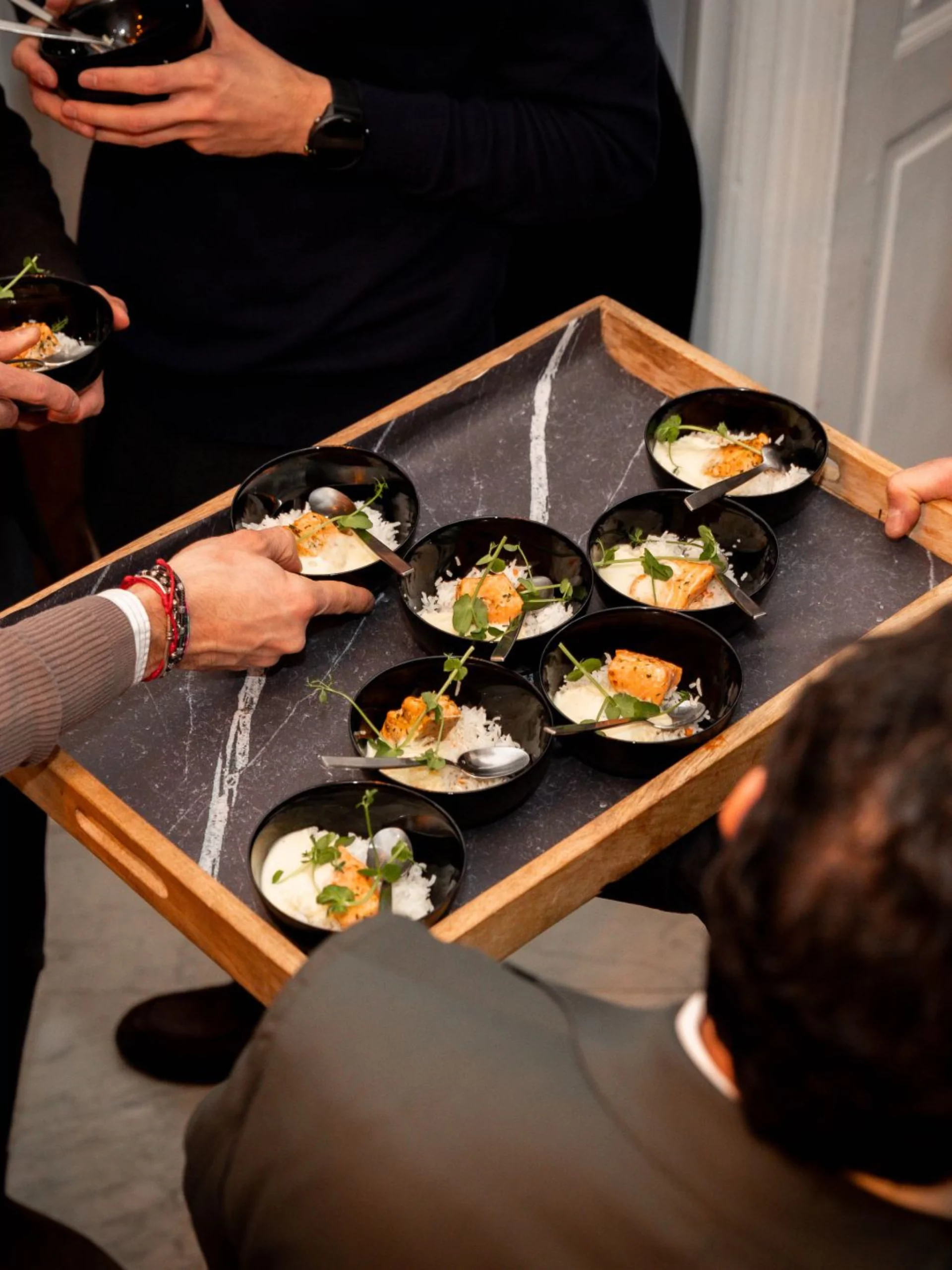

Choosing an end-of-year meal is about more than the menu. It also shapes the pace of the evening, the way teams connect and the atmosphere you create. A seated dinner encourages conversation at the table, a walking dinner creates more movement, while a buffet offers greater freedom.
Teroir Traiteur, the Tero group’s farm-to-fork caterer, creates seasonal company meals every year in Brussels, Wallonia, Flanders and throughout Belgium, at one of Tero’s 17 venues or directly at your location. Its menus, designed by chef Faizal Mota, showcase produce from the group’s agricultural network: Teroir La Ferme and Teroir de Magerotte.
D’Ieteren, BNP Paribas Fortis, Banque Degroof Petercam, Arval, Arcadis, BCG, Belfius and Delen have already entrusted their events to Teroir Traiteur.
Before choosing, ask yourself one simple question: do you mainly want to bring people together, encourage movement, make a speech or offer a more relaxed culinary experience ? Here are the points to compare, with clear budget and planning guidelines for each format.
01 / 03The walking dinner
The bites circulate, and so do the guests. A walking dinner creates a lively evening, particularly suited to encouraging interaction between teams and letting everyone set their own pace.

When it works well
You want teams to mingle, new colleagues to meet established ones, or simply to prevent everyone from spending the entire evening with their usual group. This format works especially well when sociability and interaction are central to the event.
What it requires
Smooth guest flow, places to set down a glass and some comfortable seating. The right layout depends on the venue, guest count and type of service: the aim is to leave enough room to move without making the space feel empty or overcrowded.
The pitfall
Treating the walking dinner like a simple drinks reception. To replace a meal, it needs a genuine progression, with enough bites and dishes to keep the experience generous from beginning to end.
50 to 300+ guests — a format designed to work for both medium-sized events and large groups.
02 / 03The seated dinner
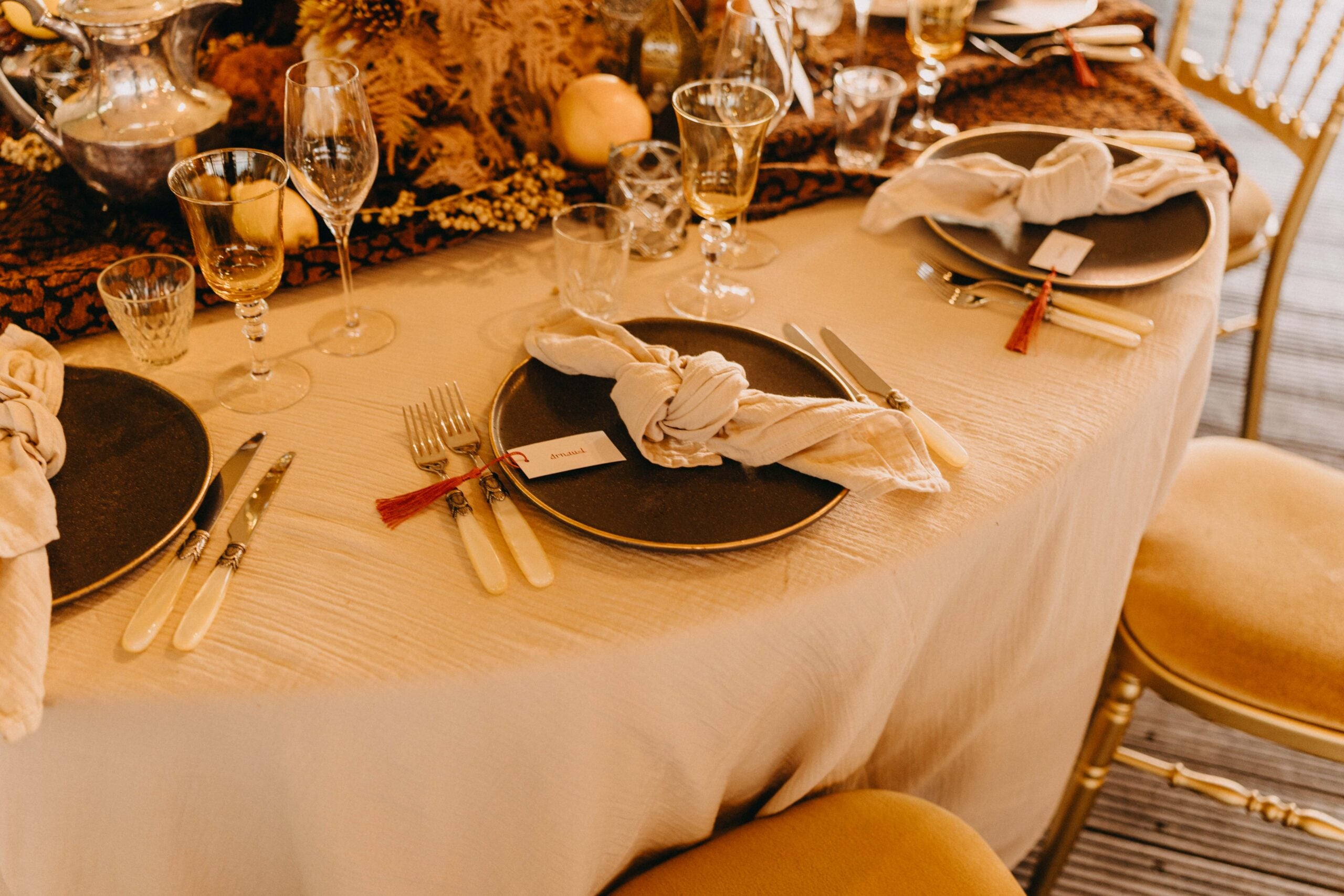
Table service, a more relaxed pace and a shared focus. A seated dinner is best suited to structured speeches and evenings where the culinary experience takes centre stage.
When it works well
You want to punctuate the evening with a speech, thank your teams, celebrate a milestone or create a more elegant occasion. Once guests are seated, it is easier to pace the evening between courses and speeches.
What it requires
A precise running order, well-coordinated service and, depending on the group size, a thoughtful seating plan. Allow 2½ to 3 hours for a three-course menu with a speech. The venue layout, kitchen access and number of guests will also directly affect the pace of service.
The pitfall
Underestimating the logistics. A seated dinner requires more coordination between the kitchen and front-of-house team than a free-flowing format. As the group grows, the venue, the number of service points and the service plan become increasingly important.
50 to 300+ guests — the actual capacity mainly depends on the venue and service setup.
03 / 03The buffet
Everyone builds their own plate and moves at their own pace. When designed well, a buffet is far more than a fallback: it can be generous, sociable and particularly effective for large groups.

When it works well
You have a large group, want to give guests more freedom or offer several culinary themes. A buffet also makes it easier to present vegetarian dishes and options for different diets. Allergies and intolerances must always be shared with the caterer in advance.
What it requires
A setup sized to the number of guests: several service points, a clear layout and sufficiently wide walkways. The number and position of buffets must be planned with the venue to prevent bottlenecks.
The pitfall
The queue. A poorly distributed buffet can disrupt the pace of the evening. As the guest count increases, it is better to add more access points or food stations.
Large groups — particularly effective when smooth guest flow and variety matter more than a sequenced table service.
The three formats, side by side
| Criterion | Walking dinner | Seated dinner | Buffet |
|---|---|---|---|
| Atmosphere | Highly dynamic | Relaxed and structured | Flexible and sociable |
| Ideal for | Encouraging teams to mingle | Speeches and hosting guests at the table | Managing a large group flexibly |
| Pace | Continuous | Set by the courses | Flexible |
| Budget* | From €70 per person | From €80 per person | From €50 per person |
| Speeches | Schedule in a dedicated time slot | Very well suited | Possible in a dedicated time slot |
| Dietary requirements | Plan in advance | Plan in advance | Highly flexible |
| Choose it if… | you want guests to move and mingle | you want to create a more ceremonial moment | you want freedom, variety and smooth flow |
*Starting price per person, excluding venue hire and drinks, for a minimum of 50 guests. Prices vary according to the menu, guest count and venue.
Three situations, three answers
“Sixty people, and we really want the teams to mingle.”
The format lets everyone move around and switch groups throughout the evening. A few well-distributed food stations can strengthen that movement and add rhythm to the experience.
“One hundred people: we want to thank the team and present the 2027 plan.”
Table service gives the evening a clear structure and makes it easier to speak at the chosen moment. The speech can take place between two courses without interrupting a room full of moving guests.
“Two hundred and fifty people: we want a generous evening with a smooth flow.”
Guest flow becomes the priority. Several food areas spread out the guests, avoid queues and create a livelier experience than a single buffet.
Already planning your event? Discover Tero’s end-of-year formats.
What if you combined formats?
What if the best answer was not to choose? An end-of-year celebration can combine several formats as the evening unfolds.
Walking dinner followed by a seated dinner
An initial standing reception lets guests mingle before moving to the table for a more formal sequence. This combines the movement of the first format with the structure of the second.
Seated dinner followed by a standing dessert
The reverse: guests begin seated, speeches take place, then the room opens up for dessert and the rest of the evening. Conversations restart and groups naturally reshuffle.
Starter buffet, main course served at the table
An appealing way to combine a sociable atmosphere with plated service. The starters create movement, while the table-served main course adds structure at the heart of the meal.
What really matters
The best format is the one that serves the purpose of your evening. Ask yourself one question before choosing: at the end of the event, what would you like your teams to have experienced together?
If you want to encourage new connections, choose a mobile format. If you want to speak and create a more ceremonial moment, a seated dinner will often feel more natural. If freedom, variety and smooth flow are priorities, a buffet or food stations offer greater flexibility.
They trusted Teroir Traiteur
Major companies such as D’Ieteren, BNP Paribas Fortis, Banque Degroof Petercam and Arval have already entrusted their events to Teroir Traiteur. The same high standards apply to every event, from corporate evenings to large private receptions.
“Your commitment, professionalism and attention to every detail far exceeded our expectations. […] The quality, presentation and refinement of the food truly brought it to another level and were noticed and appreciated by all our guests.”
Georges and Mylène, reception for 183 guests at Château de Terblock
Your end-of-year celebration starts with the right format
Walking dinner, seated dinner, buffet, food stations or a hybrid format: Teroir Traiteur creates a seasonal experience tailored to your guest count, venue and desired atmosphere — at a Tero venue or directly at your location, in Brussels, Wallonia, Flanders and throughout Belgium.
Frequently asked questions
Where does Teroir Traiteur operate?
Teroir Traiteur operates in Brussels, Wallonia, Flanders and throughout Belgium: at Tero’s 17 venues, in your offices or at a reception venue of your choice.
Can we hold our end-of-year meal in our offices?
Yes. Teroir Traiteur works at Tero venues and at a venue of your choice: offices, reception rooms or another suitable space, in Brussels and elsewhere in Belgium. The venue’s technical setup is reviewed in advance to organise the kitchen, service and guest flow.
How far in advance should we book?
For a celebration in December, ideally book two to three months ahead, in September or October. Thursdays and Fridays in December fill up first. For a quieter date in January, six to eight weeks is often enough.
What is the difference between a walking dinner and a buffet?
At a walking dinner, dishes and bites are designed to be enjoyed throughout the evening, with service that moves alongside the guests. A buffet gives everyone more freedom to serve themselves and compose their meal. Both formats can be complemented by food stations.
How should we plan for dietary requirements and allergies?
Food preferences and dietary requirements should be considered while planning the event. Teroir Traiteur offers vegan alternatives across its formats. Allergies and intolerances must always be shared in advance so the team can adapt the food and service.
Read also: Company end-of-year celebration: why is it worth marking the occasion?